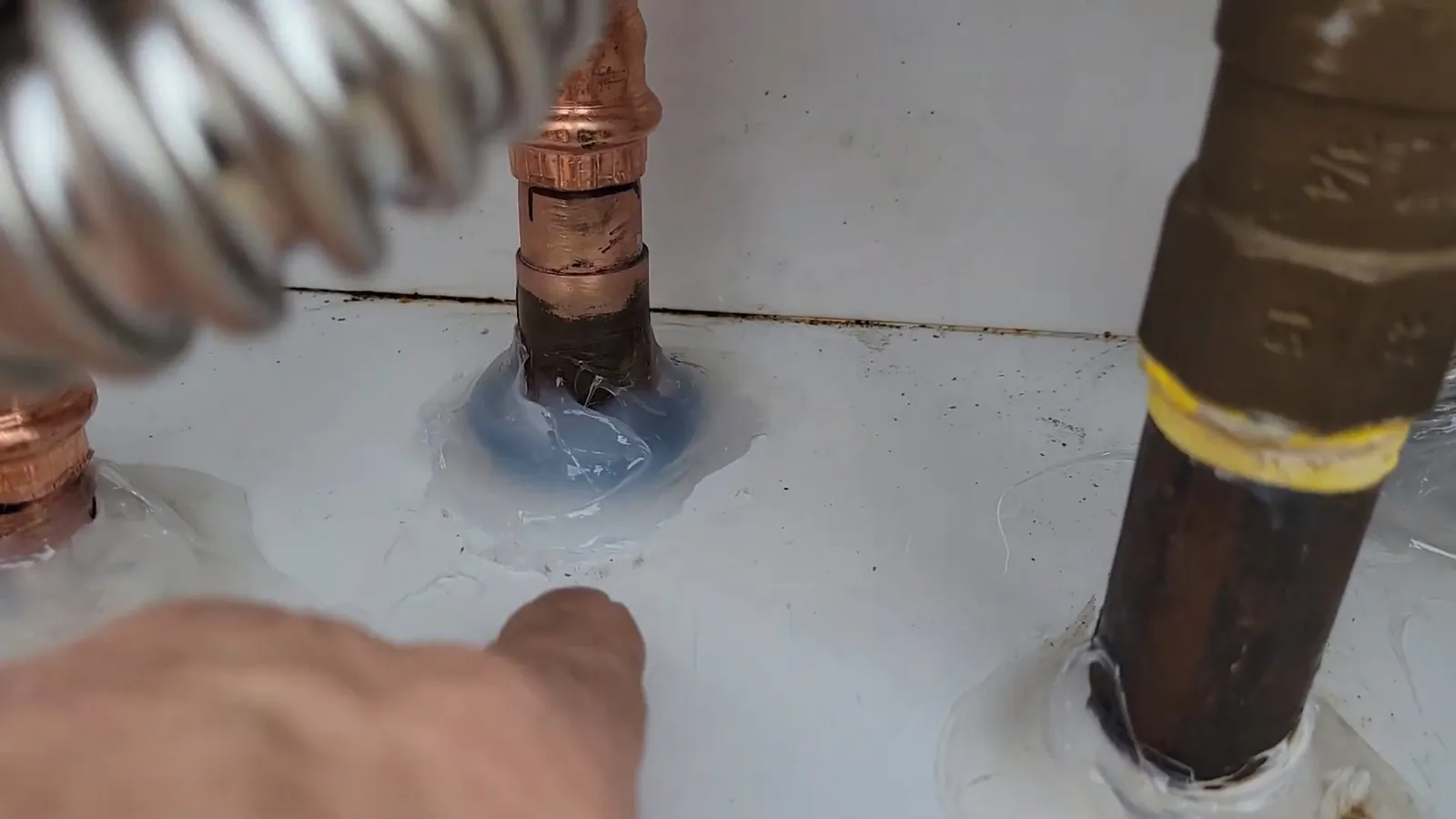
Water Heater Repair in Aliso Viejo, CA: Leaks, Cold Showers and Pilot Problems
Water heater repair covers the parts that fail before the tank does: a pilot or igniter, a thermostat, a heating element, a relief valve, a connection that has started to weep. It is for homeowners whose heater is making noise, running out of hot water or leaking, and who need to know whether the unit is worth fixing.
Below, the common problems are sorted by symptom, gas heaters are separated from electric ones, and the page explains when a repair stops making sense and a replacement quote is the better next step.
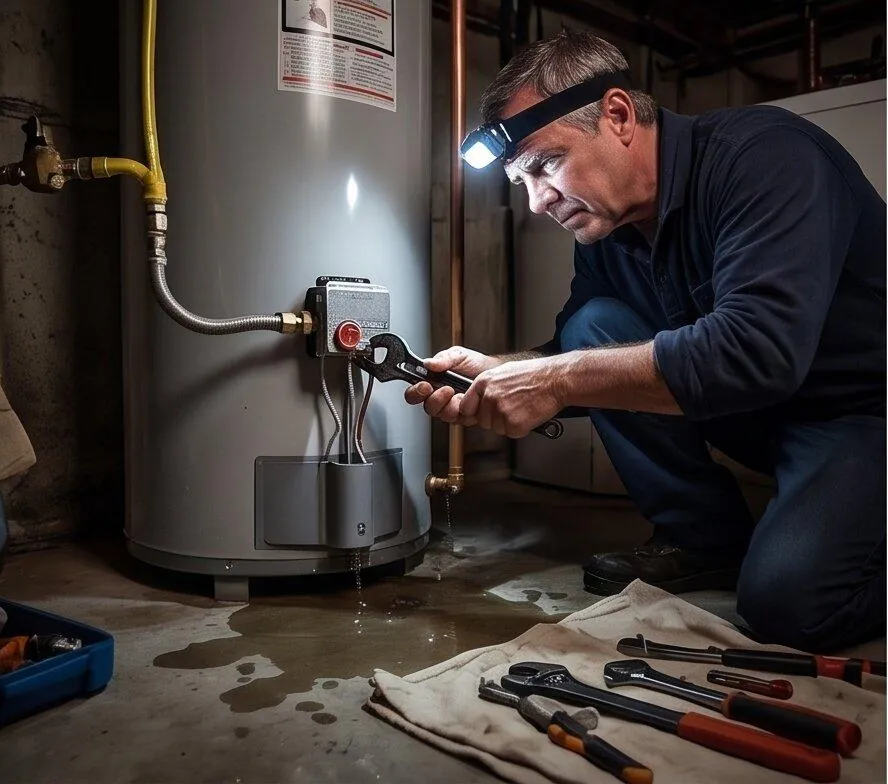
No hot water or a leaking tank? Sort the problem before the call
Most heater calls start with one of five symptoms, and each one points at a different part. Saying which one you have, and whether the heater is gas or electric, lets a plumber arrive with the right parts.
| Symptom | Gas heater, usually | Electric heater, usually |
|---|---|---|
| No hot water at all | Pilot out or thermocouple failed | Tripped breaker, failed thermostat or element |
| Water warm, never hot | Dirty burner or failing gas control | One of two elements has failed |
| Water runs out quickly | Sediment in the tank or a failed dip tube | Lower element failed or heavy sediment |
| Popping or rumbling noise | Sediment hardened on the tank bottom | Scale on the elements |
| Water on the floor | Weeping connection, relief valve or the tank itself | The same three |
Callers who say the pilot light is out are usually describing a gas heater that needs a relight or a new thermocouple. Callers who report water pooling in a garage are describing a leak that needs to be located before anything else, because a tank that is leaking from the shell is a different decision from a connection that is dripping.
Leaking tank: when a leak means repair and when it means replacement
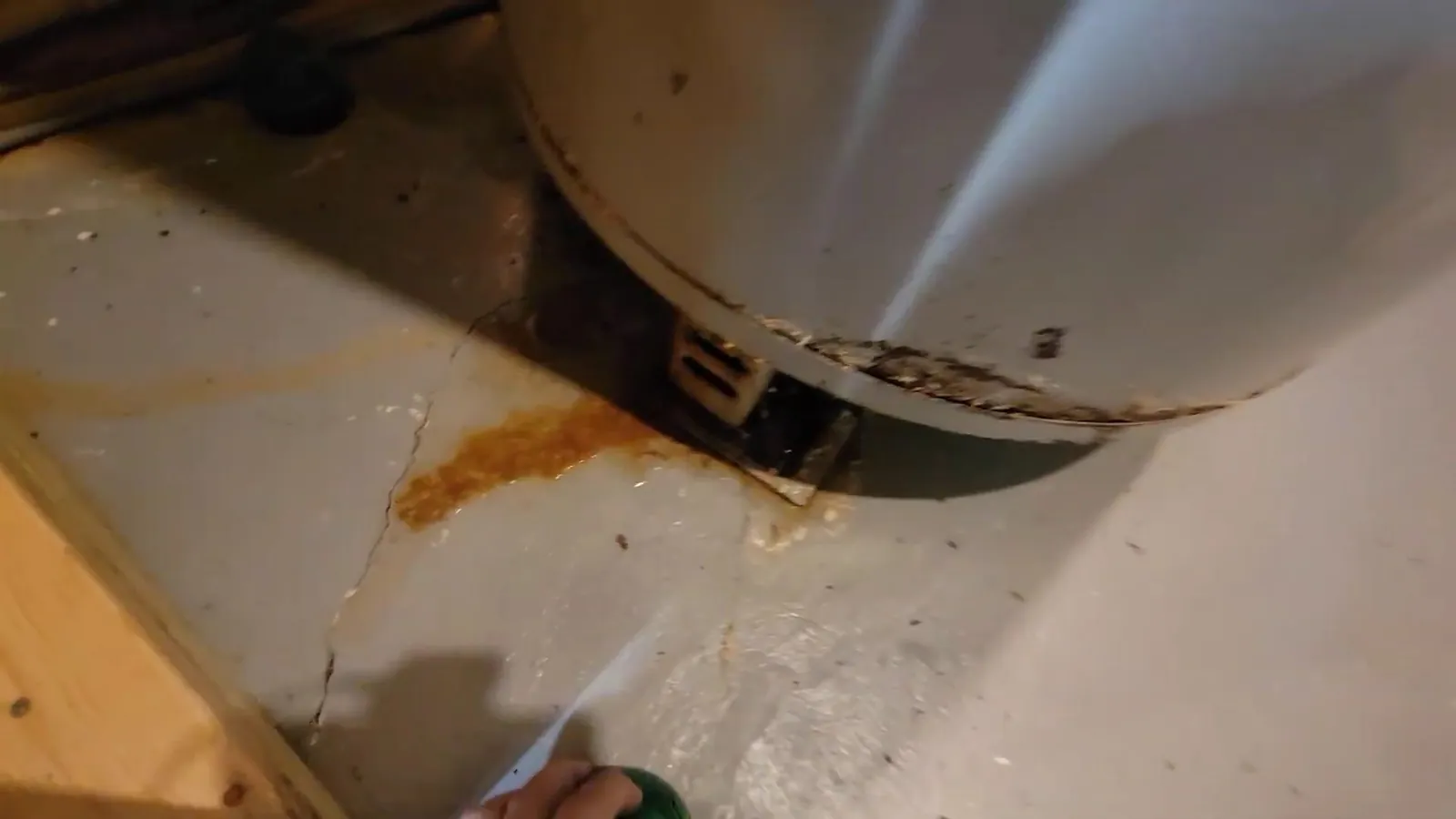
The location of the leak decides it. A drip from a supply connection, a drain valve or the temperature-and-pressure relief valve can often be repaired. Water seeping from the bottom of the tank, or from the shell, means the tank has corroded through, and no repair holds. In that case the question becomes how to replace it, and the water heater replacement quote page covers what to ask for.
Active water is a reason to act now. Close the cold water supply valve on top of the heater, and for an electric unit switch its breaker off if the panel is dry and easy to reach. Leave a gas heater's controls alone beyond the supply valve and call. Ask a plumber to check whether the leak is the heater or a line near it before agreeing to anything.
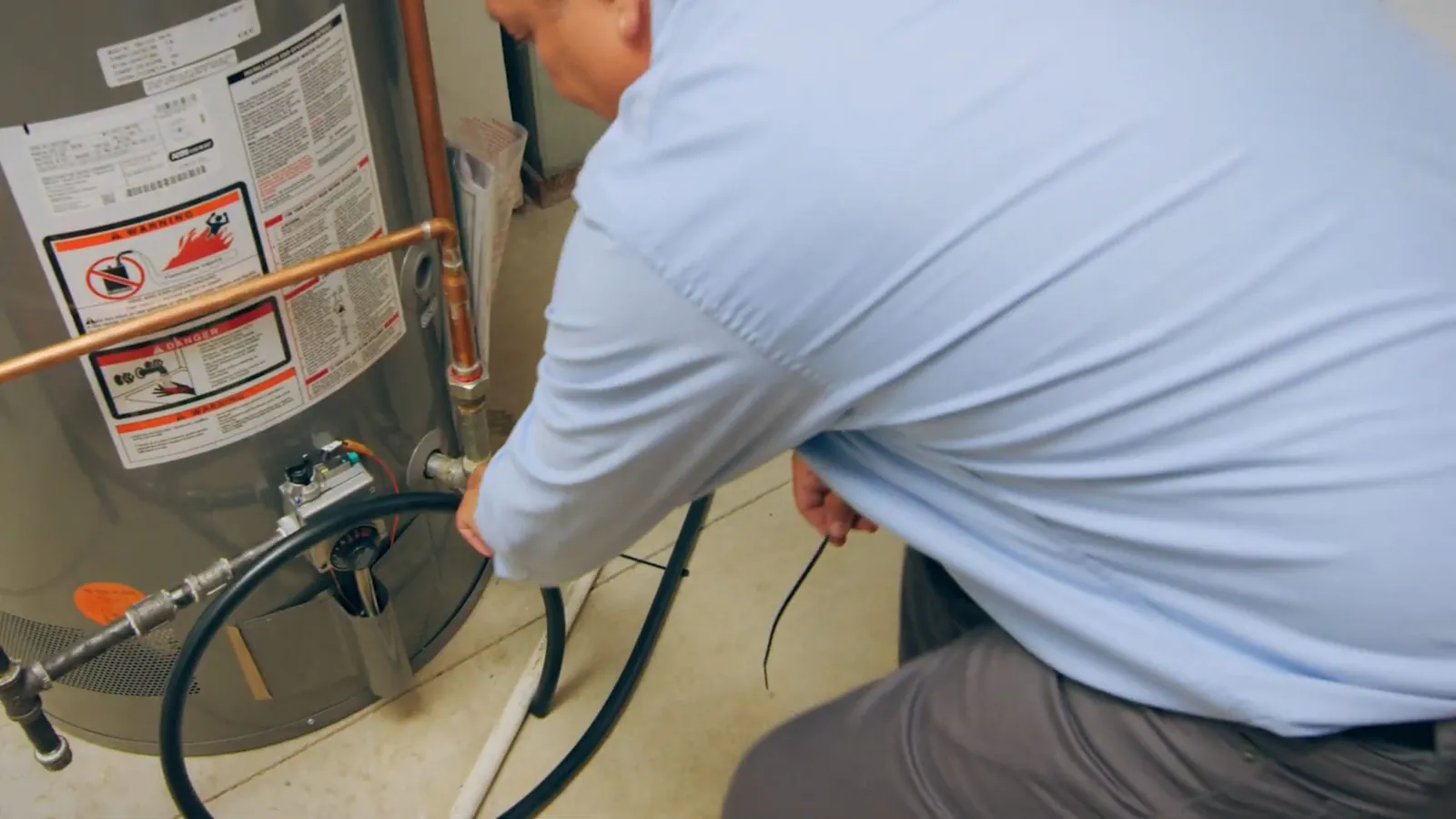
Gas versus electric: different parts fail, different checks apply
Gas heaters
A gas heater has a burner, a pilot or electronic igniter, a thermocouple that proves the pilot is lit and a gas control valve. A pilot that will not stay lit usually has a failed thermocouple, a dirty pilot orifice or a draft. Igniter failures show as a heater that clicks and never lights. The burner can also be coated with debris and produce a weak or uneven flame.
If you smell gas, get everyone out first, then contact the gas utility (Southern California Gas Company) or 911 from the yard or street. Do not light a pilot, touch light switches or attempt any gas repair yourself. Gas piping and appliance hookups are on the gas line repair page.
Electric heaters
An electric heater has two heating elements, upper and lower, and a thermostat for each, plus a high-limit reset. A heater that runs out of hot water fast usually has a dead lower element. No hot water at all is often the breaker, the upper thermostat or the reset button. These are repairs of parts, not of the tank, and they are straightforward when the tank is sound.
Which to repair, and when to stop
A repair makes sense when one part has failed in a tank that is otherwise sound. It makes less sense when the tank is old, when it has needed several repairs in a short time or when the repair costs a large share of a new unit. The data plate on the tank shows the manufacture date, so you can give the plumber its age when you call.
Hard water, sediment and flushing
A 2023 report from Moulton Niguel Water District puts average hardness at 13.3 grains per gallon, a hard-water level. Hard water leaves scale on heating elements and settles as sediment at the bottom of a tank. Scale insulates the element and wastes energy, and sediment makes the popping noise and can shorten the tank's life.
Flushing the tank removes loose sediment, and it is easiest on a heater that has not been neglected for years. Ask the plumber whether the anode rod is worth checking, and whether a flush is advisable on a tank that old, because a very old tank can start leaking once disturbed. If scale keeps returning, the water softener and filtration page explains what a softener does and what it does not. The 13.3 value is Moulton Niguel's; nothing was looked up for the El Toro Water District area.
Source for the hardness figure
MNWD's 2023 Consumer Confidence Report gives the average and notes that its supply is imported Colorado River and State Water Project water.
Source: MNWD operations pages and 2023 report. Checked October 2026.
What a repair visit should confirm: relief valve, strapping and the drain pan
A repair is a good moment to check the safety items the City of Aliso Viejo lists for installations. Its handout for water heater installations lists seismic strapping, an expansion tank where the system is closed, a drain pan, relief valve discharge piping and venting. The rules apply when a heater is installed or replaced, but a repair visit can show whether yours has the same items.
- A relief valve with a discharge pipe that runs to a safe location.
- Strapping that holds the tank to the wall, which California law requires on replacement heaters.
- A drain pan under the heater if it sits where a leak would do damage.
- A vent that is intact and connected, on a gas heater.
If something is missing, it is a conversation about the scope of a replacement or an added part, not a reason to accept an unexplained quote. Source: City of Aliso Viejo water heater handout, checked October 2026.
Noise, no hot water and when it can wait
A heater that makes noise but still heats can usually wait for a scheduled visit; sediment is the common cause. No hot water is an inconvenience, and it becomes urgent when water is leaking, a gas smell is present or the heater is in an attic or on an upper floor where a leak will spread. A same-day request goes to the dispatch line, and timing depends on demand.
If a leaking tank has already soaked a floor or a wall, the drying and cleanup side is a separate job from the heater.
Water heater repair questions
My water heater is leaking. Can it be repaired?
It depends where the water is coming from. A weeping supply connection, a drain valve or a relief valve can often be repaired. Water from the bottom or shell of the tank means the tank has corroded through, and replacement is the only fix. A plumber can find the source in a short visit.
Should I flush my water heater?
Flushing removes loose sediment and is useful in hard-water areas. Moulton Niguel Water District reports 13.3 grains per gallon on average. Ask the plumber whether the tank's age and condition make a flush a good idea, since a very old tank can start leaking once disturbed.
Water is still coming through. What do I do right now?
Close the cold water supply valve on top of the heater. For an electric heater, switch its breaker off if the panel is dry and reachable. If it is gas, leave the controls alone and call. If there is a gas smell, leave the home and contact the gas company or 911 from the street.
How long do water heaters usually last?
Tank heaters commonly last around a decade, and the manufacture date is on the data plate. Hard water and neglected maintenance can shorten that. A plumber can tell you whether a repair is worth making given the tank's age.
Water is leaking outside near my heater. Is it the heater?
Not necessarily. A line, a hose bib or an irrigation connection near an exterior heater can leak onto the same spot. Close the heater's supply valve and see whether the leak stops. If it continues, the source is another line, and a meter test shows whether water is escaping.
No hot water, or a heater that is leaking?
Call the dispatch line and say whether the heater is gas or electric and where it is leaking. The call is routed to a plumber serving Aliso Viejo.
Call (949) 209-5456