Tankless Water Heater in Aliso Viejo, CA: Fit, Hard Water and Descaling
A tankless water heater heats water as it passes through, instead of storing a tank of it. That is the whole idea, and it is why the questions about one are different: how much gas and venting the house can supply, how hard water treats the heat exchanger, and who services the unit when an error code appears.
This page covers who tankless suits, what changes in the house to install one, what descaling is for and what to check when one stops working.
Is tankless a fit? Gas supply, venting and electrical limits
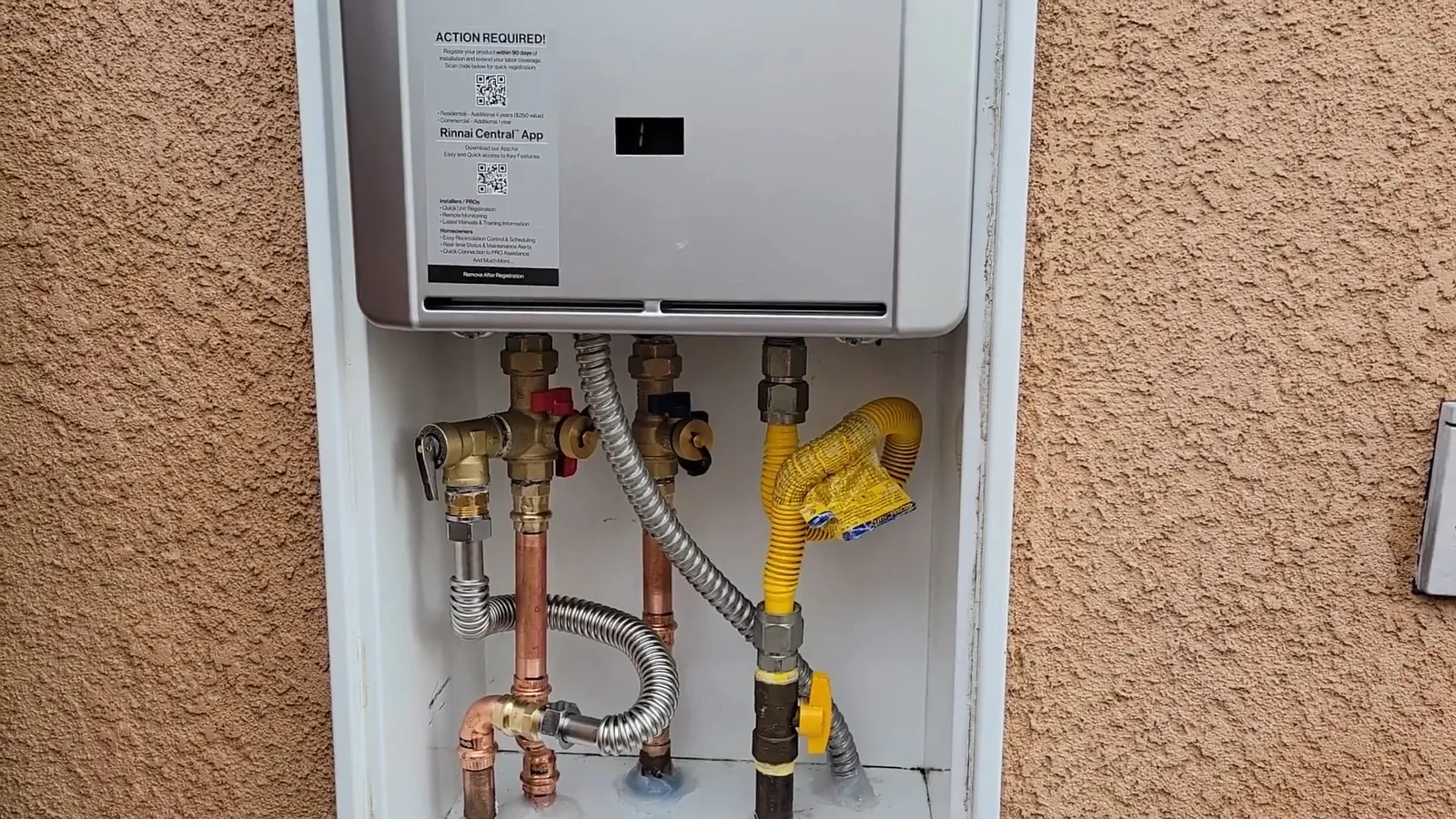
Tankless units can deliver hot water for as long as they are running, and they take up little floor space. They also ask more of the house than a tank does: a larger gas supply, special venting and, for most models, an electrical connection for the controls. Whether those are available at your heater's location decides whether tankless is practical, so ask the plumber to confirm each before any quote is accepted.
Southern California Gas Company serves Aliso Viejo, and a gas tankless heater draws on that supply at a higher rate than a tank burner does. Ask whether the existing gas line can carry it, because a longer or narrower line may need to be upsized. The gas piping for new appliances page covers what that work involves.
| Consideration | Tank heater | Tankless heater |
|---|---|---|
| Hot water supply | A stored volume that can run out | Continuous, limited by the unit's flow rate |
| Space | A floor footprint and clearance around the tank | Wall-mounted, small footprint |
| Gas and vent | Standard burner and vent | Larger gas demand, specific vent material |
| Hard water | Sediment builds at the tank bottom | Scale builds inside the heat exchanger |
| Service | Flushing and anode checks | Descaling and error-code diagnosis |
If you smell gas near any water heater, tank or tankless, leave the home first and phone the gas company or 911 after you are a safe distance away. Gas connections are not a do-it-yourself job.
Tankless installation: what changes in the house
A replacement of a tank with a tankless unit changes more than the heater. The vent is usually different, because tankless heaters often use a dedicated vent material and a different route to the outside. Condensing models also need a drain for the acidic condensate they produce. The gas line may need to be larger, the unit needs power for its controls, and the water supply has to deliver enough flow to start it.
- Venting: the route, the material and the clearances.
- Gas: the line size, the length and the connection, with a leak test afterward.
- Electrical: an outlet or circuit for the controls.
- Condensate: where the drain goes, for condensing models.
- Water: shutoff and service valves, which make descaling possible later.
The city's installation handout does not state a permit rule for converting a tank to tankless, so ask whether one is needed, who is pulling it and what the number is. Starting early is costly, since the published fee schedule doubles fees for work begun without a permit. For the general checklist, see the water heater replacement checklist.
Hard water and tankless: why descaling is not optional
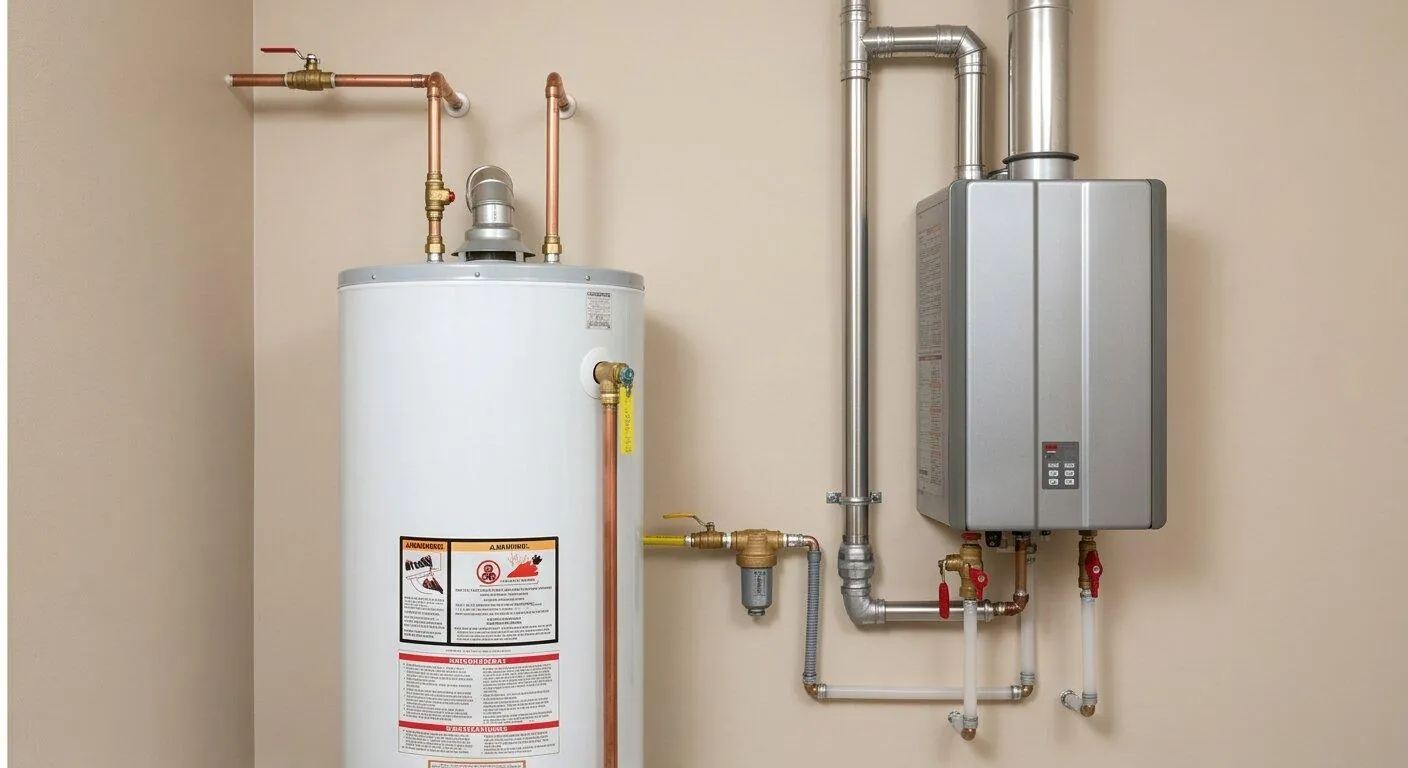
Moulton Niguel Water District's 2023 report gives an average hardness of 13.3 grains per gallon. Hard water leaves scale on whatever it is heated against, and in a tankless unit that is the heat exchanger, where even a thin layer of scale hurts performance. Descaling, which circulates a cleaning solution through the unit via its service valves, removes the scale.
Ask about the manufacturer's schedule, and whether the installation includes the valves that make a flush possible. A homeowner who asked about a tankless flush after a poor earlier visit was asking the right question: find out in advance exactly what the service involves, and what will be recorded afterward. If scale keeps returning, treating the water before it reaches the heater is the longer-term answer.
Source and limits of the hardness figure
The figure is Moulton Niguel's; El Toro Water District's value for its part of the city was not looked up, so check your bill for the district that serves you.
MNWD's 2023 report supplies the figure. Checked October 2026.
Tankless water heater repair: error codes, cold water and no ignition
Most tankless problems announce themselves with a code on the display, and the code points to the system at fault: ignition, flame, venting, flow, temperature or scale. The common complaints in plain terms are no hot water, water that swings from hot to cold, a unit that tries to light and fails, and a unit that shuts down after a short run.
| Symptom | Common cause | What is checked |
|---|---|---|
| No hot water, display shows a code | Ignition, flame or venting fault | The code, the gas supply, the vent for blockage |
| Hot, then cold, then hot | Scale, a low flow or a mixing issue | Flow rate at the fixture, a flush of the heat exchanger |
| Unit clicks and will not light | Gas supply, igniter or flame sensor | The gas valve, the igniter, the sensor |
| Runs briefly and shuts off | Overheating from scale or low flow | Scale, filters, the temperature sensors |
Safe checks before the call are limited. Confirm the unit has power and that the gas valve is open, note the code and try the reset once as the manual describes. Do not open the unit, and do not touch gas components.
Replacing a tank with a tankless unit: conversion questions
A conversion replaces the tank with a wall unit and re-routes the vent, the gas and the controls power. Ask what is changing, who is pulling the permit and what condition the existing gas line and shutoff valves were in when it was inspected. A conversion quote that only names the heater and the labor is missing the vent and the gas line.
Gas or electric, brands, and tank versus tankless in one place
- Gas or electric. Electric tankless units draw a very large current, so the electrical panel decides what is possible. Gas units draw on the gas line and need venting.
- Brands. The brand matters less than the model's venting, gas and electrical needs and whether parts and service are available for it.
- Tank versus tankless. A tank suits a house where the vent and gas line are already in place; tankless suits a house where space and continuous supply matter and the connections can be made.
Tankless water heater questions
Can I replace my tank water heater with a tankless one?
Often, but it is a conversion project. The vent, the gas line size, the electrical connection for the controls and the water supply all have to suit a tankless unit. A plumber can check each at your heater's location and say what would change.
What is the difference between tankless and tank water heaters?
A tank stores heated water and can run out. A tankless unit heats water on demand and is limited by its flow rate, with a larger gas demand and specific venting. Tankless suits houses that can supply those connections; a tank suits houses where the existing ones work.
Why does a tankless heater need descaling in Aliso Viejo?
Moulton Niguel's 2023 average hardness is 13.3 grains per gallon, and hard water leaves scale on the heat exchanger. Descaling removes it. Ask for the manufacturer's schedule and whether the installation includes the valves that make a flush possible.
Thinking about tankless, or a unit that has stopped?
Call the dispatch line and say whether the unit is gas or electric and what it is doing. The call is routed to a plumber serving Aliso Viejo.
Call (949) 209-5456