Emergency Leak Detection in Aliso Viejo, CA: Rising Water Bills, Wet Walls and Hidden Leaks
Most people look for a leak by looking for water. A leak does not always leave any: it can run under a slab, inside a wall or along a yard line while the only sign is a water bill that keeps climbing or a meter that will not stand still.
That changes what the first step should be. Before anyone opens a wall, three questions settle most of it: is water really leaking, which side of the meter is it on, and what should the plumber document once the source is found. The sections below take them in that order.
Is water really leaking? Run the meter test first
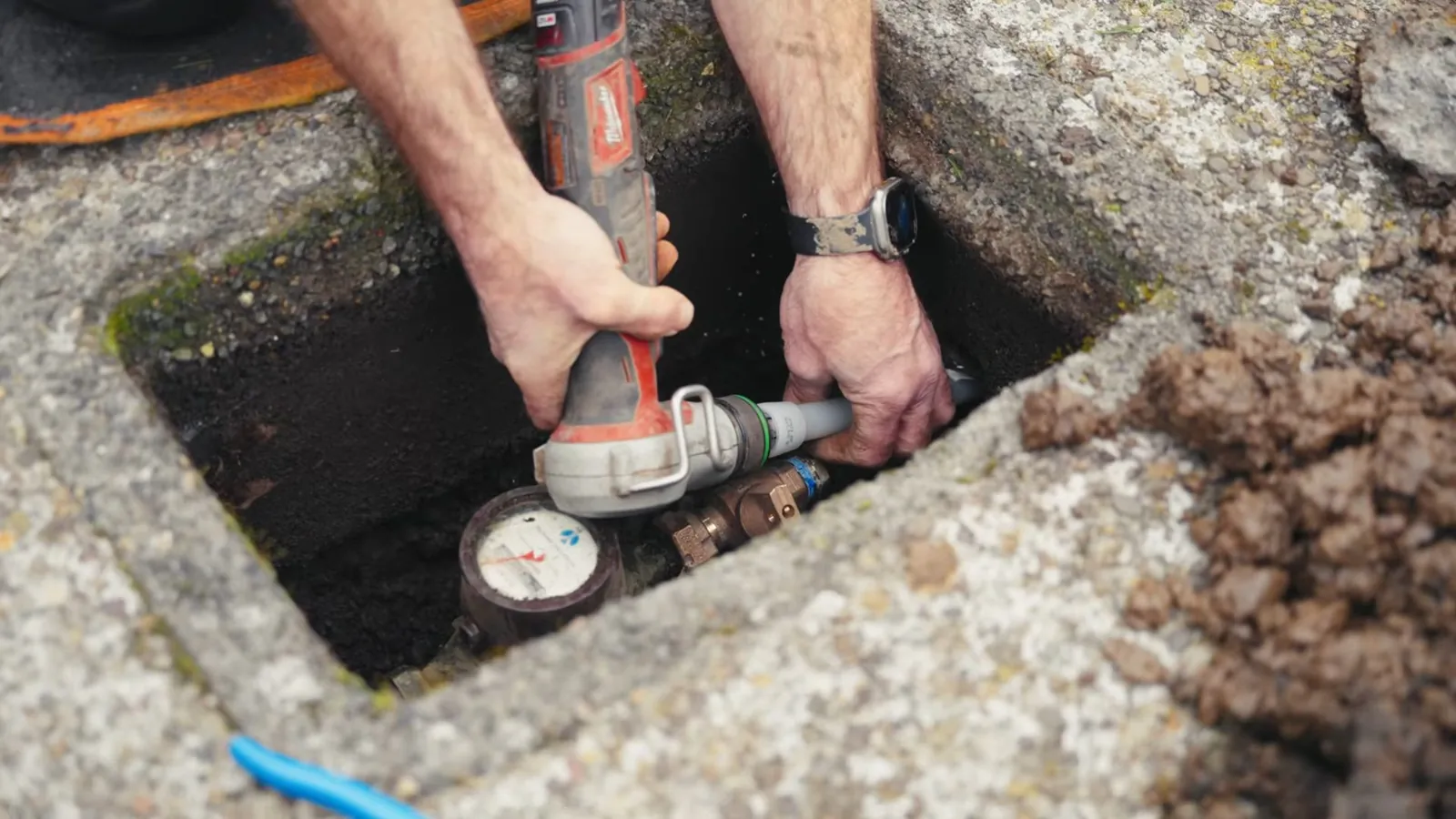
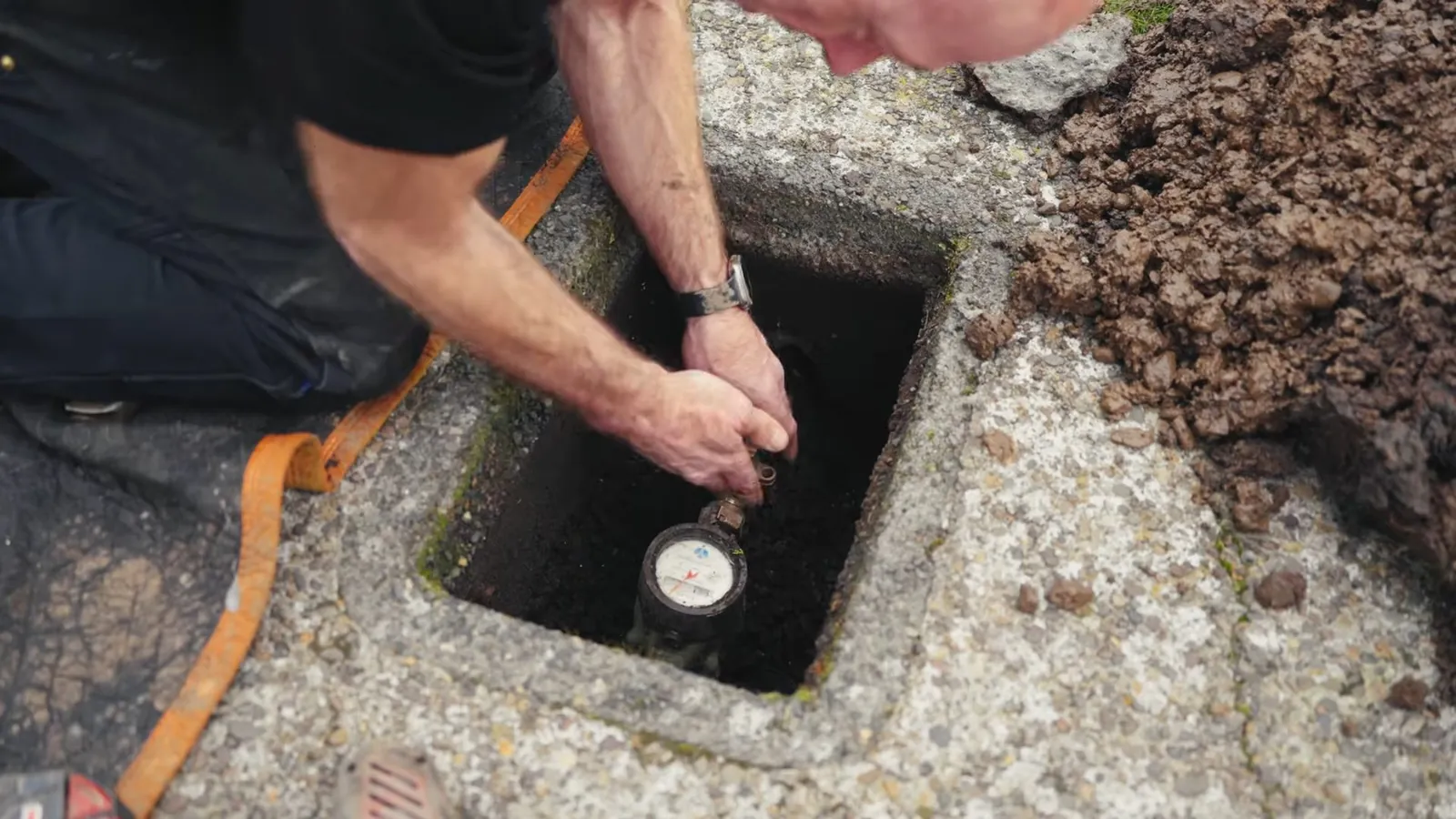
A simple check published by Moulton Niguel Water District is the safest first step on any suspected leak. With nothing in the house using water, the meter either moves or it does not.
- Turn everything off. No faucets, dishwasher, washer, ice maker or irrigation running.
- Read the meter and wait. Note the reading or watch the small leak indicator, then look again after a stretch with no water use.
- Close the main house valve and the branch valves. That includes irrigation and any pool line. Turn them gently, because the district warns that old valves can break.
- Look at the meter again. If it stops once the house valve is closed, the water is escaping somewhere past that valve. If it keeps moving, the leak is between the meter and the valve.
A meter that moves with everything off means water is leaking, and the next question is where. A steady meter rules out a continuous leak during the test. It does not rule out a leak that runs only when a toilet refills or an irrigation zone cycles on.
Source for the meter test
The district describes the isolation check on its leak page, including the warning about old valves.
Source: MNWD Fix a Leak. Checked October 2026.
Where the leak is: before the meter coupling, after it or inside the house
Moulton Niguel maintains the line from the main through the meter and its outlet coupling. The homeowner owns everything after the coupling, including the house valve and the irrigation and pool branches. That boundary decides who repairs the leak, so before authorizing work ask the plumber on which side of the coupling the leak sits. Anyone on El Toro Water District service should ask that district where its responsibility ends.
A broken run from the meter to the foundation is a job for service line replacement, and a leak under the floor belongs with slab leak detection. The table lists the signs that usually point to each place.
| What you notice | Likely location | What a plumber checks |
|---|---|---|
| Meter moves with everything off; ground wet near the curb or yard | Service line or an irrigation branch | Which side of the meter coupling; each branch valve closed one at a time |
| Bill is up, but the meter stops when the house valve is closed | Plumbing inside the house, past the valve | Isolating sections of the house line, then the fixtures |
| Warm or damp spot on a floor | A line under the slab or in the floor | Location with listening equipment before anything is opened |
| Stain that spreads on a ceiling or wall | A supply or drain line in the wall, or a source that is not plumbing | Moisture readings; whether the stain grows when no one uses water |
| Toilet refills by itself or a fixture hisses | A fixture, not a buried pipe | Flapper, fill valve and supply connections |
| Soggy patch that returns on irrigation days | An irrigation line or zone valve | Zone-by-zone pressure check |
Leak detection service: how a plumber finds a hidden leak
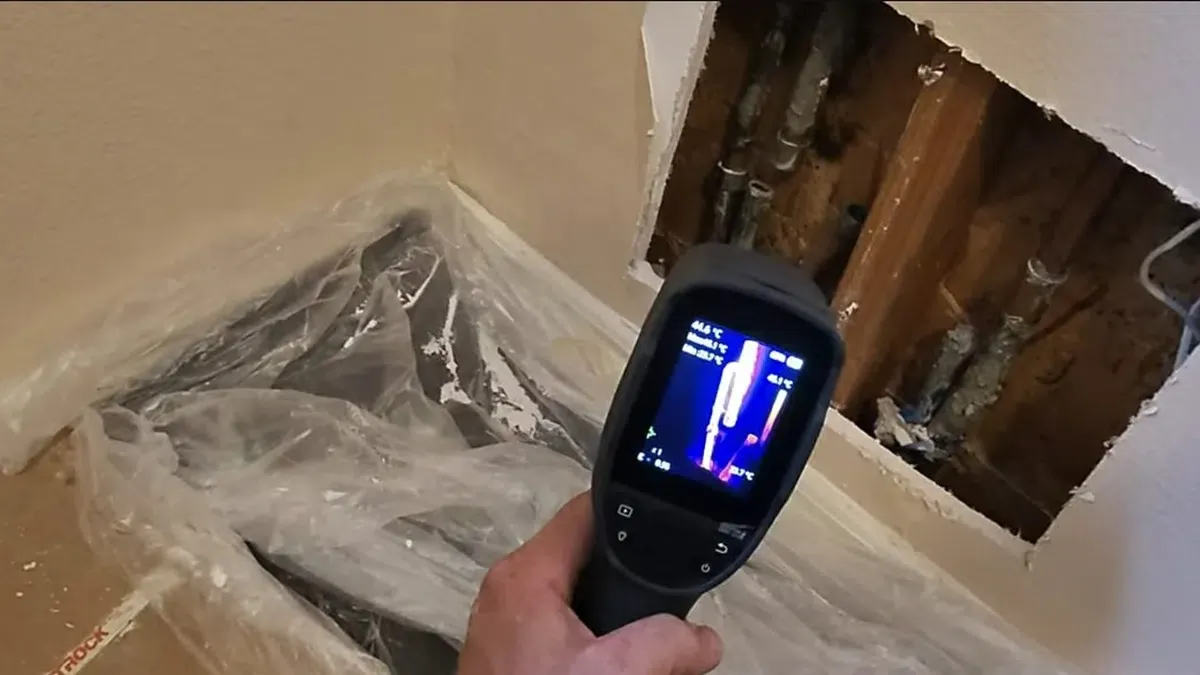
Advanced leak detection means electronic, thermal and acoustic tools that narrow a search which once meant opening ceilings and floors to guess. A listening device picks up the sound of water escaping a pressurized line. A thermal camera shows temperature differences on a wall or floor. A pressure test shows whether an isolated section of pipe holds pressure. None of them replaces the meter test, which proves that water is moving; the equipment says where.
A hidden-leak visit also includes a look at the condition of the pipe around the leak, because the right repair depends on it. One failure in sound pipe is a different problem from the third pinhole in the same run.
What to ask the plumber to document
- The location, as a measurement or a marked spot, not just a room name.
- Which pipe it is and what it is made of, if it was seen.
- What has to be opened to reach it: wall, ceiling, floor or yard.
- Whether the quote covers the repair only or also patching and finish work.
- Whether the leak was on the district side or the owner side of the coupling.
Leak repair: what changes once the source is found
Finding the leak turns the job into a repair decision. One failed joint or a worn fitting, in pipe that is otherwise in good shape, usually gets a spot repair. A section that has failed more than once is a different conversation, and the page on repeat leaks in the same line covers when replacing a run, or the whole system, is the better call.
Access drives the rest. A leak in an open run is quick to reach. One behind tile or under a finished floor needs a decision about how much to open, who patches it and what the final surface will look like. Get those three answers in writing before the work starts, so the repair quote and the patching quote are not two different surprises.
Dig notice for yard and slab work
If the repair means excavating, ask whether DigAlert has been notified; the city's handout gives contractors a two-working-day lead time.
Dig-notice instruction from the city's pool and spa handout, listed under applications and handouts. Checked October 2026.
Fixture leaks that look like pipe leaks
A toilet that refills by itself, a faucet that drips at its base and a shower valve that stains the wall behind it all use water without a buried pipe being involved. They also move the meter. A quick toilet check needs only food coloring: add a few drops of food coloring to the tank and wait. If color reaches the bowl without a flush, the flapper is leaking.
Fixtures are the easier source to rule out first, and the toilet and faucet repair page covers what each symptom means. If the meter is still moving after every fixture is ruled out, the leak is in a pipe. Appliance leaks from a washer hose, a dishwasher line or an ice maker supply behave the same way, and the cleanup of the water they leave behind is a drying job rather than a plumbing repair.
Also checked on a leak visit
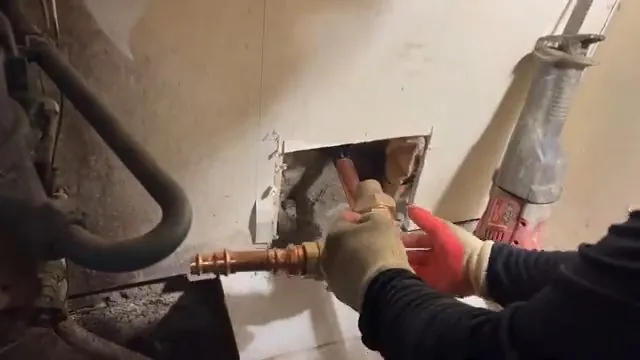
- Wall and ceiling leaks. Moisture readings show whether a stain is still growing and whether it follows a pipe.
- Under-house and crawlspace runs, where the house has them, because a leak there can hide for a long time.
- Irrigation and sprinkler lines. These are on the owner's side of the meter and are often the source of a meter that moves in the yard.
- Pipe condition. A look at what the leaking section is made of and how the pipe around it has aged.
- Pressure testing. A hydrostatic or air test on an isolated section when listening alone is not conclusive.
When to shut the water off and when it can wait
Close the main house valve now if water is spraying, coming through a ceiling or reaching outlets or the electrical panel. Stay clear of electrical equipment that is wet. A slow drip at a fixture with its own shutoff valve can wait for a scheduled visit, as long as the valve is closed and the meter is watched.
If water has already soaked drywall, insulation or flooring, the job has moved past the leak. The wet drywall and flooring page covers drying and what to document. A roof leak belongs to a roofer, not a plumber.
Leaky pipes cause hidden damage: a leak left alone does its harm out of sight. Humidity builds inside walls and cabinets, framing and flooring stay wet, and structural damage from prolonged leaks can grow long before a stain shows. Finding the source early ends that cycle. If the question is whether there is a water leak in your area rather than your house, the meter test answers it in minutes; a street-wide problem is for the water district, not a plumber. For the rest of the work a plumber does, the Aliso Viejo plumbing homepage lists every service.
Leak detection questions
Does leak detection use electronic, thermal or acoustic equipment?
Yes, those are the common tools. Acoustic and electronic listening devices pick up the sound of escaping water, thermal cameras show temperature differences on surfaces, and a pressure test shows whether an isolated pipe section holds. The meter test still comes first, because it proves water is moving.
Do I need a plumber for water leaks?
Call a plumber when the meter moves with everything off, when water is coming through a wall or ceiling, or when you cannot find the source after checking fixtures. A single fixture drip with a working shutoff valve can wait. Roof leaks belong to a roofer.
How do I find a leak in my house?
Run the meter test: turn everything off, close the house valve and the branch valves, and watch the meter. If it stops after the house valve closes, the leak is past that valve. If it keeps moving, the leak is between the meter and the valve. A plumber then locates the exact spot.
My water bill jumped. Is that a leak?
It can be. A continuous leak, a running toilet or a stuck irrigation zone all raise a bill. Do the meter test with everything off; a moving meter means water is escaping, and a steady one points to a change in use instead.
Water going somewhere it should not?
Call the dispatch line, say what the meter is doing and where the wet spot is. The call is routed to a plumber serving Aliso Viejo.
Call (949) 209-5456